Red Oolong Explained — Fruit Notes, Roast & Cup
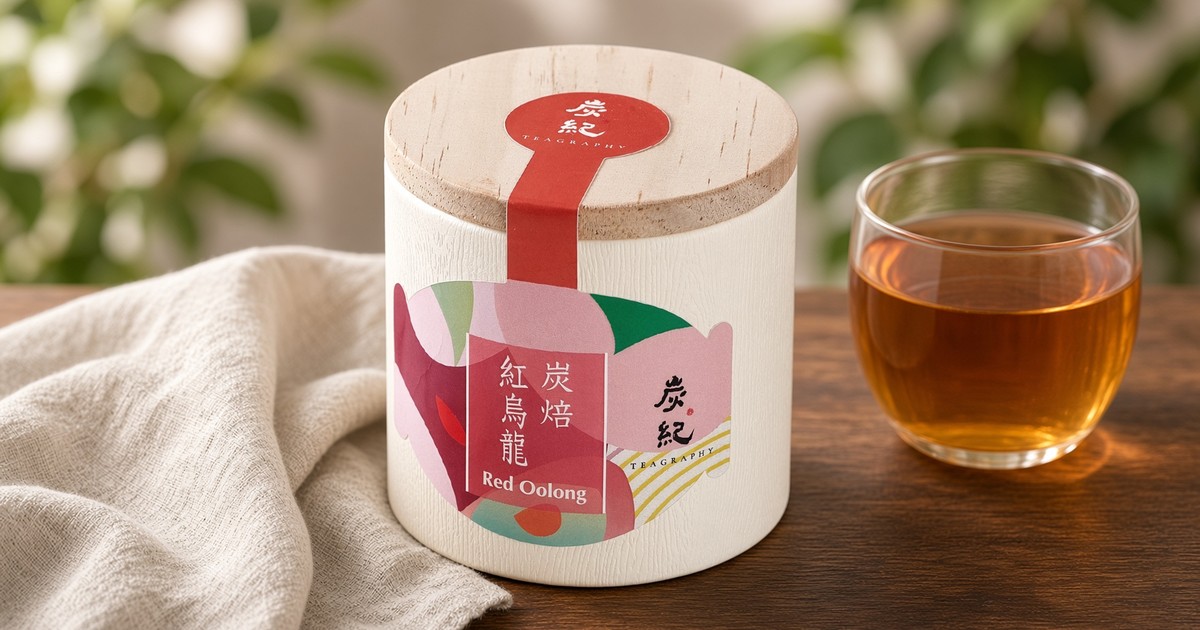
- Red oolong sits toward the deeper, more oxidized side of Taiwanese oolong: Teagraphy’s English product page describes the fragrance of black tea with the mellow sweetness of oolong.
- On the Japanese Charcoal-Roasted Red Oolong can page, the cup is framed with ripe tropical-fruit sweetness and honey-like richness finished by longan charcoal.
- Teagraphy’s Four Seasons Charcoal-Roasted Red Oolong is longan-charcoal hand roasted, offered as canned 50 g or pouch 50 g on the English shop, with SGS 481 pesticide-residue testing stated on that pa
- Japanese product specs for the 50 g can list Jin Xuan cultivar, about 80–90% fermentation, and roughly three hours of roast—read the live page for the latest wording.
- Brew for re-steeping: give the ball-rolled leaf hot water and room to open; follow the brew note on the SKU you buy (EN sachet guides differ from JP can ratios).
Red oolong is the cup many drinkers reach for when they want oolong comfort with deeper colour and a fruit-leaning, dessert-like finish. On Teagraphy’s English shop, Four Seasons Tea Gathering – Charcoal-Roasted Red Oolong is described as having the fragrance of black tea with the mellow sweetness of oolong, finished by longan-charcoal hand roasting.
What “red oolong” means in the cup
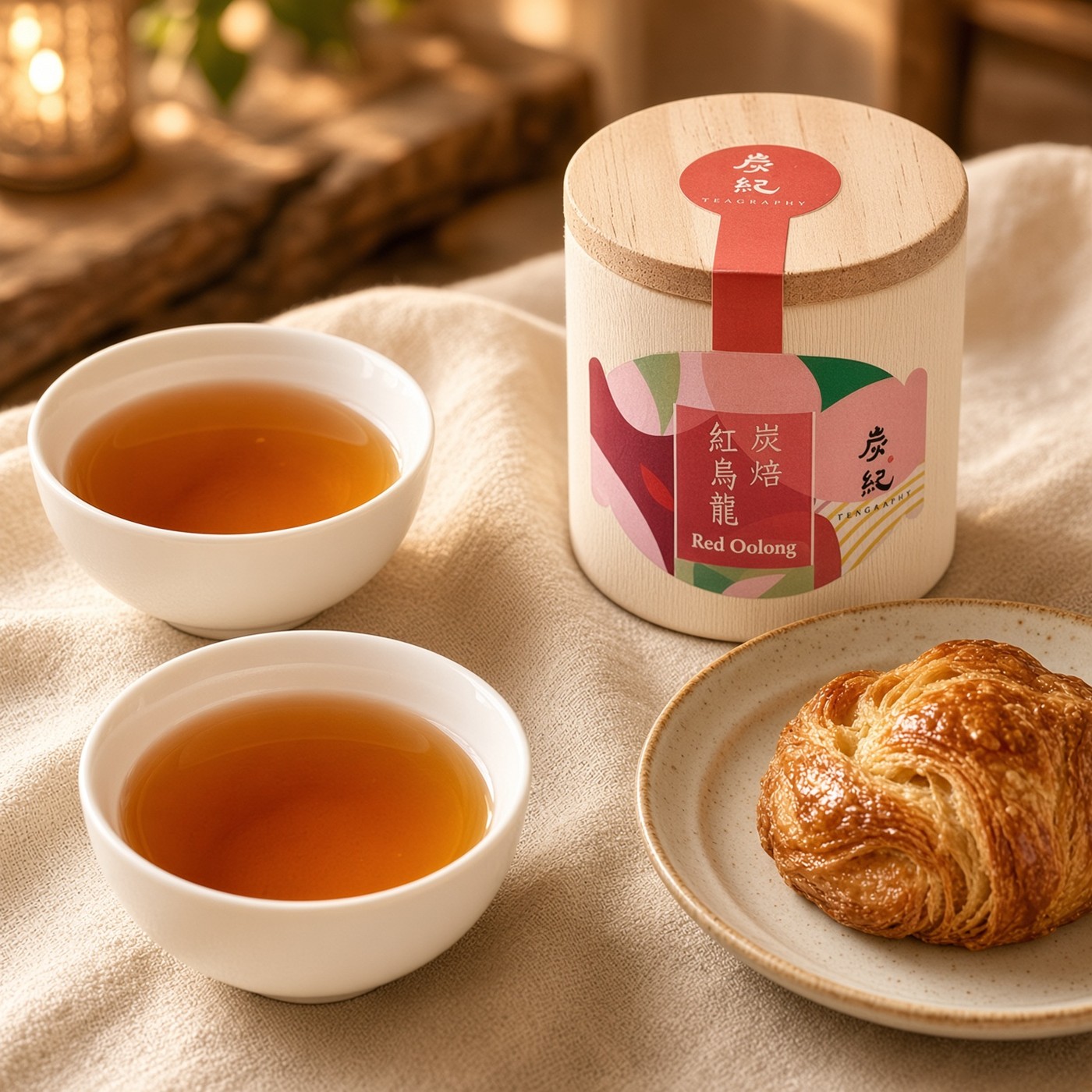
Start with oxidation and roast, not a flavour syrup. Red oolong sits further along Taiwan’s oolong spectrum than lightly floral greens: the liquor often looks warmer, and the aroma can read closer to black tea while still keeping oolong’s rounded sweetness. That is exactly how Teagraphy’s English product bullets frame the SKU.
If you also read the Japanese Charcoal-Roasted Red Oolong can page, you will see a complementary sensory map: exotic tropical ripe-fruit sweetness, honey-like richness, and a clean finish after a concentrated first impression—still leaf character, not fruit oil added to the tin.
Fruit notes, honey depth, and longan charcoal
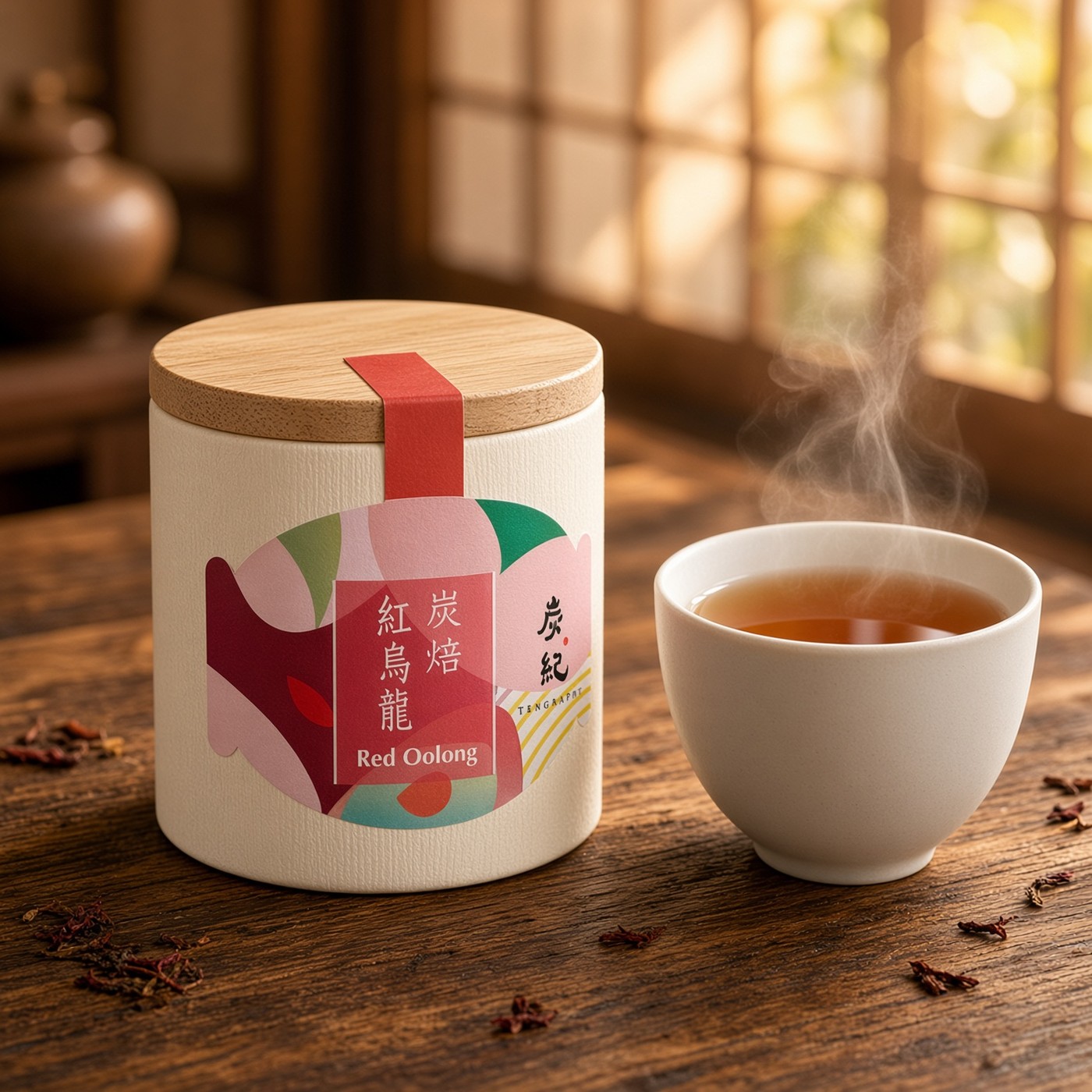
Fruit notes in red oolong usually arrive as aroma and aftertaste—ripe stone fruit, tropical sweetness, a hint of honey—rather than as a candy topping. Teagraphy’s roast is not a generic “baked” label: product copy states longan charcoal, hand roasted. The charcoal finish should support that fruit-and-honey depth instead of burying it under smoke.
On the English page you will also see practical trust lines for this SKU: canned 50 g or pouch 50 g, Made in Taiwan, grown and packed at source, and SGS 481 pesticide-residue testing as printed on that product page. Cite that page when you shop; other SKUs may list different test counts.
How to brew for fruit and re-steeping
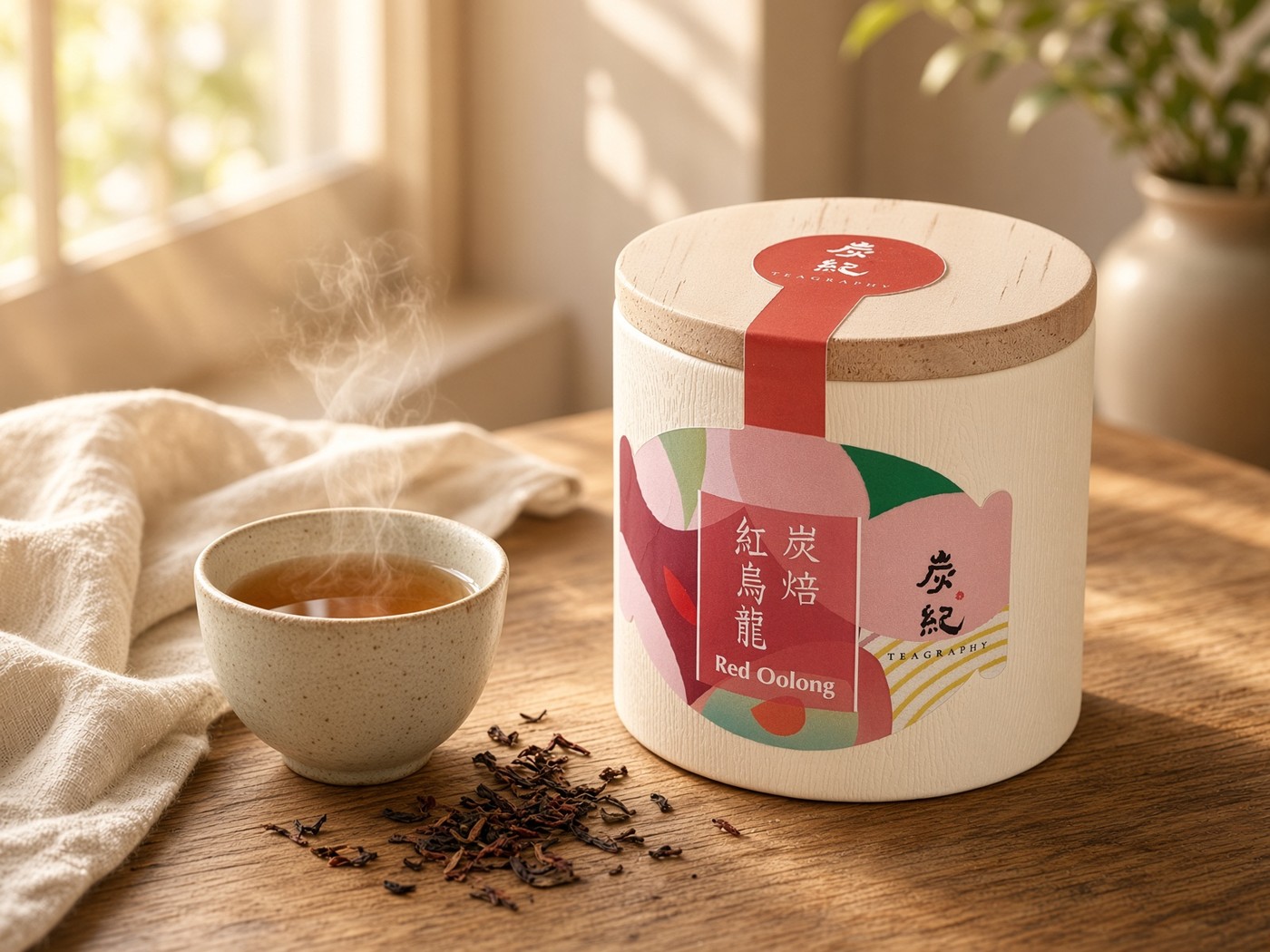
Ball-rolled Taiwanese oolong likes hot water and space. If you are using Teagraphy’s English whole-leaf sachet guides elsewhere in the range, the locked numbers are 95–100°C · 6–7 g · 300 ml · 6–7 minutes. For the Red Oolong can, scoop to taste near those hot-brew habits unless the SKU page prints a different guide. Japanese can pages publish a 100°C multi-steep timetable for their market—useful if you bought from teagraphy.jp.
- Cup profile: black-tea fragrance + mellow oolong sweetness (EN page); fruit & honey framing on the JP can page.
- Roast: longan charcoal, hand roasted.
- Formats (EN): 50 g can or 50 g pouch.
- Shop: Charcoal-Roasted Red Oolong.
If you want a deeper, fruit-leaning oolong with Teagraphy’s charcoal finish, start with that Red Oolong page, pick can or pouch, and let the first infusion show the sweetness the copy promises.
Shop Charcoal-Roasted Red Oolong · Browse all Teagraphy teas